
Getting More Girls Into Skateboarding

Getting more girls into skateboarding isn't about ability. For many, the biggest barrier is confidence and a sense of belonging.
I started skateboarding when I was around 7, but by 12 or 13 I had become painfully self-conscious. There were no other girls skating, so I practised in my garage or went out early when nobody was around. At skateparks, I often watched from the side, waiting for a quiet moment to have a go because everyone else seemed so much better.
That experience has stayed with me and influenced the way I coach today.
How SC9 Started
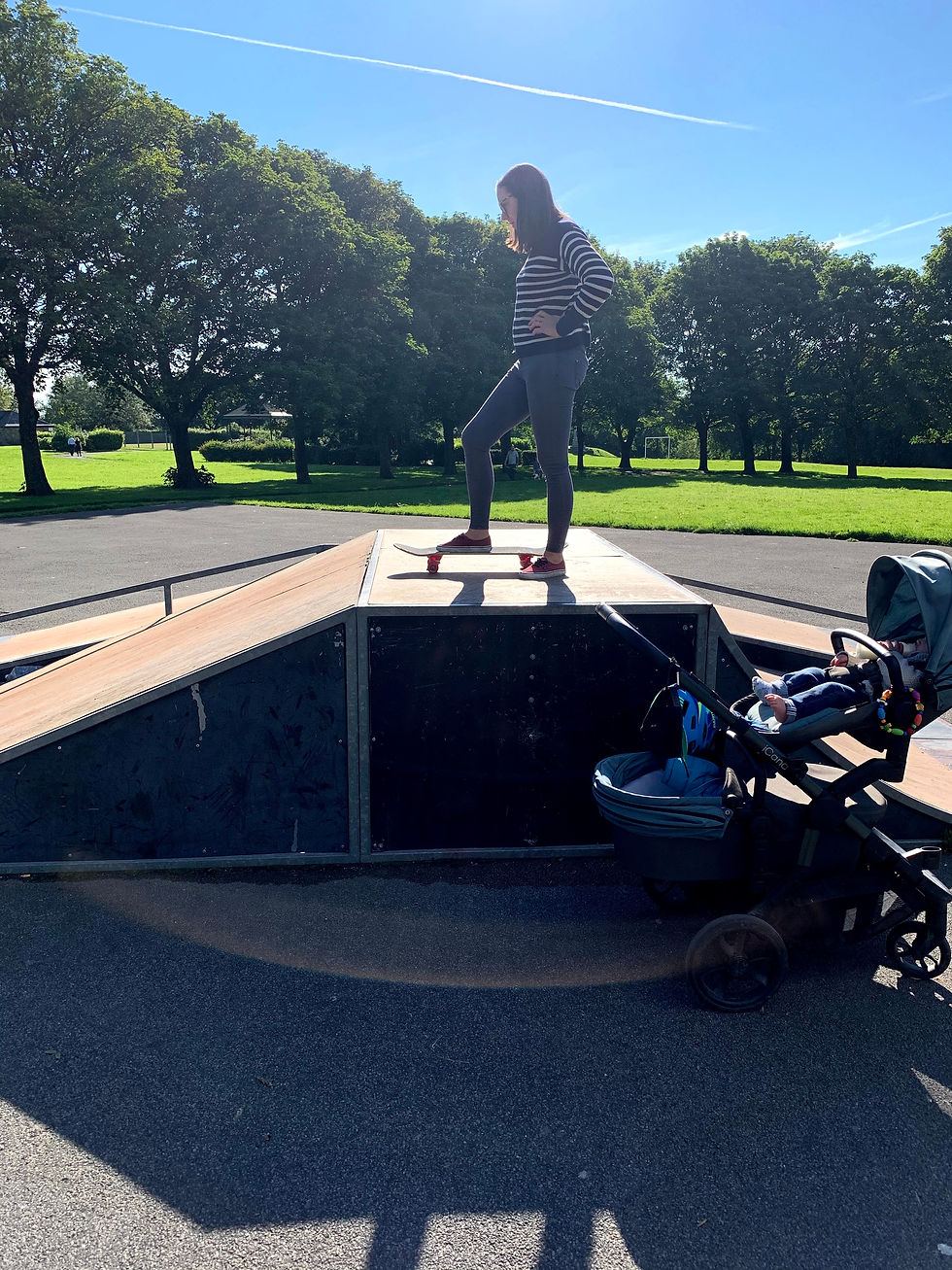
SC9 was set up to encourage more girls to skateboard. I got back into skateboarding while on maternity leave. I was off work, the skateparks were quieter, and I realised what a flexible sport it was for family life. We were in the skatepark every day: baby sleeping in his pram, my two-year-old on his balance bike, and Mum skateboarding!
After qualifying as a coach, the first session I taught was in our local village hall. I advertised at the local school to children who already had their own equipment. The session gave us some good footage to promote the next one and attracted the attention of the Rotary Club, who donated 10 sets of skateboards, helmets and pads.
My husband, Martin, wasn't convinced by my skateboarding skills . He built a flat bank, while I told him, “I'll learn with the kids. I'm good enough to teach primary school kids to kick-push!”

A few months earlier, I'd tried to get Skate It Yourself into the school where I worked, but the headteacher said no. I realised that perhaps I was the in. I worked in a school and my children attended another local school, so schools already knew me and were more likely to let me run a club.
We applied to Sport England for funding to run free after-school skateboard clubs. The first application was unsuccessful, but they gave us useful feedback. We improved it, applied again, and the second application was successful.
From there, everything started to fall into place.

I got better at skateboarding because I had to — I was spending more time on my board. Martin discovered that he enjoyed coaching and qualified too. We were introduced to local skateboarder Simon, who became a coach, and one of the mums, Charlotte, who learnt to skate at our over-25s sessions also became a coach.
We put on a stall at a school fair, and when the girls saw Charlotte, the school mum, skateboarding up and down the playground, they all wanted a go.
As a new coach starting out, you won't have all the answers. You'll probably be awake at 3am trying to figure it all out! But if you're driven by your passion for skateboarding, take the leap. Doors will open.

The Importance of Girls-Only Sessions
Girls-only sessions can make a huge difference. The pace tends to be steadier, girls are often more patient with technical tricks, and confidence can be built gradually.

Opening sessions to girls and women of all ages has also worked well. Mums started coming along with their daughters and learning together. Nobody had to walk through the door alone.
Lasting friendships have been made through the girls’ sessions. Likeminded girls from different primary schools met at the girls’ session and are now moving up the same high school together.
Girls-only sessions aren't the only answer. Some girls are happy joining mixed sessions, while others need a girls-only environment initially.
We need both.

Skateparks Can Be Intimidating
Small things at the skatepark can make a huge difference.
A simple “Hi”, a nod after someone lands a trick, or “Go on, you've got this” when someone is hesitating at the top of a ramp can make an intimidating environment feel much safer.
We also need more female coaches.
Some women hesitate to become coaches because they don't feel they're good enough skateboarders. But being a good skateboarder and being a good coach are two different things.

Coaching is about communication, patience, encouragement and helping someone believe they can do it.
A female coach might simply be the entry point for a young girl. She can learn the basics, build confidence and discover that she loves skateboarding. From there, she can progress to more experienced coaches, compete at whatever level she chooses—even potentially the Olympics.
We don't need every female coach to be an elite skateboarder. We need women willing to step forward and show girls that they belong in skateboarding too.
For me, that's the goal:
More girls on boards, more women coaching, and more girls seeing skateboarding as a place where they can belong.


Comments